00:00 - 00:39
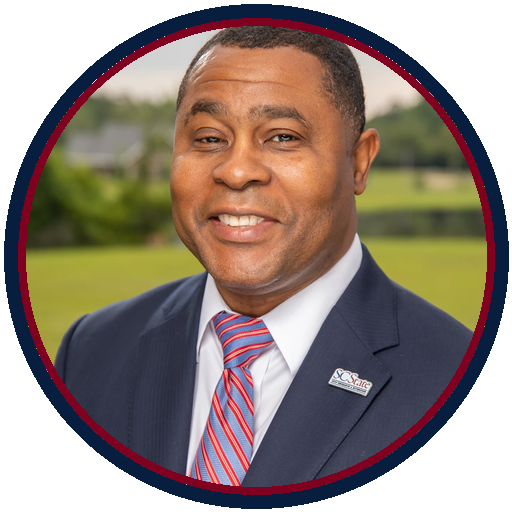
InterviewerAs with most individuals, our life experiences help shape us into the persons we are today. Today, of course, we have with us Dr. Lewis Whitesides. Dr. Whitesides, you've come from humble beginnings, working-class family from rural South Carolina. And from that environment, you developed a sense of entrepreneurship, and it's quite an interesting story. Can you talk to our viewers a little bit about how you looked at your family land not just as a huge playground, but more so as a means to generate income?
00:39 - 01:13
Dr. Louis WhitesidesWell, first of all, hello Liz! How you doing? Well, it's interesting you ask me this question because, you know, as I think back, again, I do come from humble beginnings. Like, you know, my parents got divorced when I was really young. I was like seven years old, and we stayed in Orangeburg. But during that time, we moved, and after we moved, we moved out to my mother's family land. Her grandfather and her father subsequently left her land that she actually built a house on, and it was about 224 acres.
01:13 - 01:46
Dr. Louis WhitesidesSo, nine years old, we out there playing, we doing this stuff, and the land is just growing up, but I'm looking at farmers in the fields across, you know, crops growing. So I asked my mother, I was like, well, why don't we grow any crops? Why aren't there any crops on our land? She was like, well, that's our land, you know, we don't farm it, such and such. So I asked her like, well, do you think we could make some money off of it, you know, renting it to the other farmers or doing stuff? She was like, well, I don't know if we can actually do that, that sort of thing. But my curiosity was already piqued.
01:46 - 02:16
Dr. Louis WhitesidesSo, I asked a farmer that I knew, Mr. Melvin Crum, who was one of the big farmers in our area, about it. He was like, well, hey Lewis, I really want to rent your land. Your mama won't rent it, won't rent it to me, like that. So I came home and said, hey, Ma, Mr. Crum wants to rent the land. You know, she was like, no, we're not going to rent no land, that sort of thing. You know, she was real sentimental to the land. You know, it's my grandfather's land and, you know, my father passed it down to me, so, you know, I really don't want nobody on our land. So, you know, I kept working on her, and we talked and talked.
02:16 - 03:05
Dr. Louis WhitesidesAnd so, John Frederick, who was an extension agent from Clemson, a Clemson extension agent, stayed up the street. So I went up to his house riding my motorcycle, and I said, Mr. Frederick, how much it cost to, how much people pay to rent the land? And so he actually showed me the almanac and showed what crops need to go in the land, when they need to be planted, all those kind of things, and how much you make off of the land. So now I'm thinking like, man, we have 200 acres, and man, if we can make $2,000 per acre, I was doing the math and thought it was a lot of money because again, we were not rich. My mother worked, she was a teacher, so we had a little bit of stuff, but we didn't have a whole lot. So I thought about like, man, we could really make some money. So now my mind went into overdrive, like, how do I convince my mother to do this?
03:05 - 03:57
Dr. Louis WhitesidesWell, I couldn't convince her to do it, but what I did convince her to do, our next-door neighbor Mr. Phelps wanted to do farming. He didn't have any of the startup money. So me talking to him, again, just in the neighborhood talking, and again, keep in mind, I'm like 10 years old. I said, well, Mr. Phelps, let me ask you this. If you could use our land and plant the crops, could you split the profits with us? He was like, Whiteside, that might work! You know? I'm like, okay, well, let me ask my mama. So I went back, asked my mother again, like, Ma, Mr. Phelps said if he can use our land, at the end when he harvests the crops, he'll pay us, you know, a portion of it. And still, my mother was like, okay, well, just get the details. I think at that time she was like, this boy keep coming to me about planting and farming and renting our land. She said, get the details.
03:57 - 05:00
Dr. Louis WhitesidesSo again, I went back up to John Frederick, who was the Clemson extension agent, and said, hey, Mr. Frederick, how should this work? He told me, hey, you need a contract. If you get Mr. Phelps to agree to give you, and I asked him what was a good number, he said 25%. He said, so if he makes, a hypothetical, $100,000 and he gives you $25,000 and you don't have to do anything, man, that's a win-win, man. I was like, you might need to talk to my mama, but let me go talk to her again. So I go back, I talk to my mother again, again, this took place over a few months now, so this didn't happen all at once. And I went back and talked to my mother, I said Mr. Phelps wants to talk to you about the land. She was like, boy, you talking about this land again? I'm like, yeah, Ma, we can make some money! So Mr. Phelps did talk to my mother about it and helped put this whole thing together. Long story short, we became sharecroppers. Mr. Phelps came in, he planted the land, you know, he just was getting off the ground trying to get his farm together, and at the end of the harvest season, he paid us as he should. And man, it was a good boost! It paid the taxes on the land and we got a little bit of money out of it.
05:00 - 06:19
Dr. Louis WhitesidesSo, that went on for a few years. So as I got older, about 15, I think this happened about five years, it really became a good economic boost to our family. As it went on, Mr. Phelps' kids graduated and left, and so he couldn't maintain the farm anymore, so he didn't want to do it anymore. But now in the back of my mind, if you remember, Melvin Crum, who's one of the big farmers, wanted to use our land. So at that time, I was of age and I can talk the talk and that sort of thing. So I called up Mr. Crum and said, hey Mr. Crum, listen man, I think you can rent the land now. He said, I don't think your mama gonna let you, let you do it. I said, she will! I said, come by the house. I said, Ma, Mr. Crum's coming here to talk about renting the land. She came to the house, but she was open to it this time because she had already seen what we could actually do with it. Long story short, Mr. Crum rented the land until his death, and this went on for 20 years. And right now his nephew, Antron, rents the land right now, so it's continuing. So, my mother has since passed on, but I still rent the land right now, to a farmer to actually farm our land right now. So it's, that kind of started me in the agriculture and that sort of thing and little entrepreneur spirit and that sort of thing. But it was, it really turned out really well.
06:19 - 06:44
InterviewerI definitely love that story because it's not your typical lemonade stand, you know, story. I mean, you were well beyond your years in thinking. So how does that now, the skills that you acquired then, how does that help shape you as you are developing research projects and even thinking about ways to use your entrepreneurial skills?
06:44 - 08:50
Dr. Louis WhitesidesWell, when, when you think about research, if you think about the faculty who conduct research, or whoever funds the research, it is an entrepreneur enterprise. Everybody's working for some payout some kind of way. So I think that actually helped me shape, it shaped me in the way of being able to communicate with all parties and making sure everyone gets what they want out of the situation. So, my mother didn't think she wanted anything, but when I could actually tie all the pieces together to show her how we would benefit, and her growing up on a farm, it wasn't foreign to her, but I don't think she really wanted to get into the farming and the operations of it. Again, she was a single parent, she was a woman, it was three of us and then my little sister came and made four of us. You know, she was worried about raising us and educating us and that sort of thing, the land was taking care of itself. But the land really took care of itself, I mean it really gave us a leg up when we did that. So I think communication and being able to communicate the pluses to all parties involved, and getting the right people at the table, making sure they connect and making sure that everyone needs are met. When it's a win-win for everybody, it's easier to do. And I think I learned that going through that process with my mother and, and I think the, the good thing about it was, everybody was right there at my disposal so I could move around. Mr. Phelps stayed next door, you had Mr. Frederick that stayed right up the road right there who really helped, you know, in the whole process. And then on top of that, all these people knew my mother cause all of them grew up in the same area. And so they kind of knew how stubborn she was, so they really didn't think I could get it done. And but with their help, I was able to get it done. So, communication is, is the big key and being able to communicate to everyone involved what the outcomes are going to be and making sure that the outcomes are positive as you planned. Thank you.